Types of Memory Loss
Memory loss is forgetfulness without impairment in function. There a many types of memory loss. This page defines mild cognitive impairment, dementia, and Alzheimer’s disease.

Mild Cognitive Impairment
Mild cognitive impairment (MCI) involves cognitive impairments beyond those expected based on an individual’s age and education, but which are not significant enough to interfere with most activities of daily living. MCI may occur as a transitional stage between normal aging and dementia, especially in Alzheimer’s disease.
Dementia
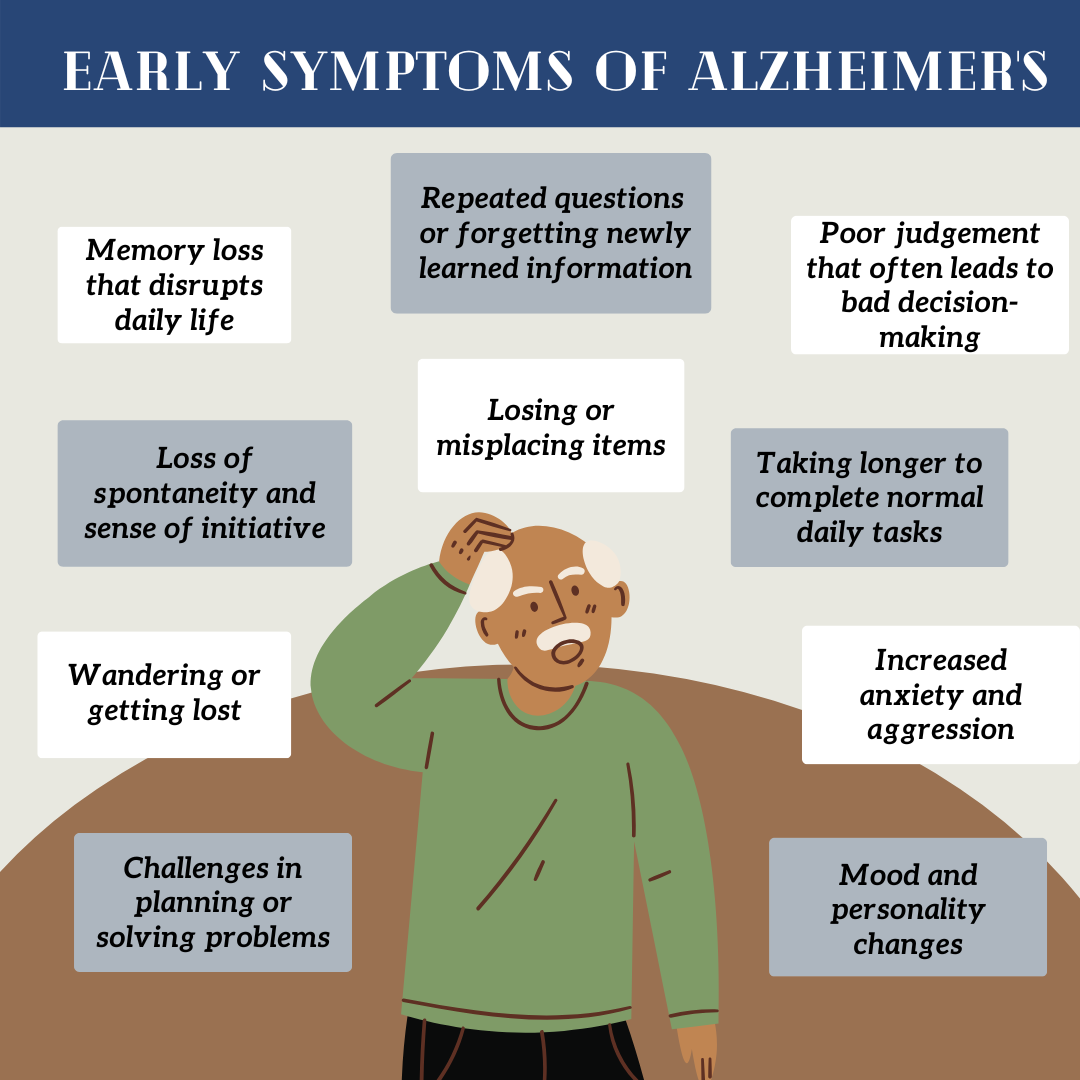
Dementia is a term used to describe a range of conditions affecting the brain that worsen over time. It is the loss of the ability to think, remember, and reason to levels that affect daily life and activities. Some people with dementia cannot control their emotions and other behaviors, and their personality may change. Dementia isn’t a disease. It’s a symptom of brain disorders that negatively impact cognitive function. Alzheimer’s disease is the most common reason why people develop dementia but certainly is not the only cause of dementia.
Alzheimer’s disease:
Alzheimer’s disease (AD) is the most common cause of dementia. AD is a biological process that starts when proteins–specifically amyloid plaques and neurofibrillary tangles–begin to abnormally accumulate in places in the brain. These protein deposits disrupt the normal function of brain cells, causing the cells to die gradually and leading to the shrinkage of the brain over time. This happens in parts of the brain that control thought, memory, and language.
Alzheimer’s disease is progressive, and, over time, can seriously affect a person’s ability to carry out daily activities. The exact cause of AD is unknown, but researchers have identified risk factors and believe that genetics may play a role in developing Alzheimer’s disease.