
Memory Loss Evaluation and Testing

Memory Testing and Evaluation

No single test can diagnose memory loss. Memory loss is complex, so a comprehensive evaluation is necessary. A healthcare professional will make a diagnosis and treatment plan after performing a combination of cognitive assessments, medical exams, lab tests, and brain imaging.

All of these tests help your doctor rule out potential causes and diagnose your memory loss. These tests are important for making an accurate diagnosis, which is essential for the success treatment and management of your memory loss.

If you would like to learn more about the testing and diagnosis of memory loss, please visit the website linked below.
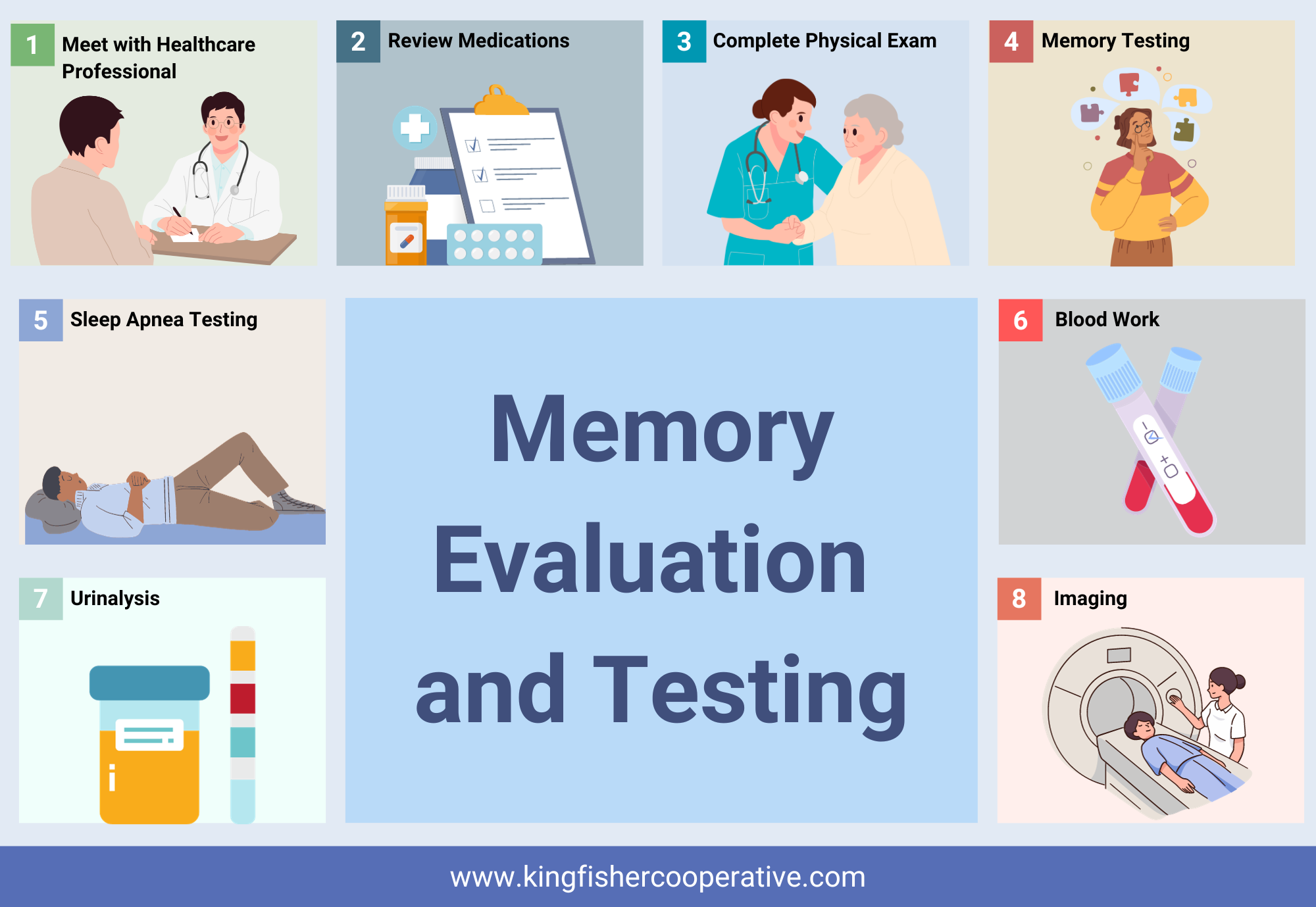
If you are being evaluated for memory loss, your primary care provider will likely review your medical history/prescribed medications and perform a physical examination. The following may be discussed during your appointment:

Some radiology tests are used to help diagnose memory loss by identifying structural and functional changes in the brain.

Some radiology tests are used to help diagnose memory loss by identifying biomarkers, which can confirm diagnoses and help distinguish between different types of dementia. Both of the tests below are more accessible in major cities.

  • Amyloid PET scan
  • Tau PET scan

Doctors will use lab tests to rule out other conditions and identify potential causes of symptoms, as many dementia-like symptoms can be causes by treatable issues like vitamin deficiencies, thyroid problems, or infections.

  • Standard lab tests
    • Blood lab tests
      • Electrolytes, kidney, and liver function (CMP)
      • Complete blood cell count (CBC), Thyroid (TSH)
      • Vitamin B12, folate (B9), lipid panel
    • Urinalysis
  • Advanced lab testing (considered)
    • Blood tests
      • Hemoglobin A1c (HbA1c)
      • Vitamin D
      • Erythrocyte sedimentation rate (ESR) and/or auto-immune panel
      • Omega-3 index
    • Cerebrospinal fluid test
      • Opening pressure, cell count, protein, and glucose

Some lab testing is done to detect biomarkers, which can confirm diagnoses and help distinguish between different types of dementia.