
Alzheimer’s disease
Understanding Alzheimer’s disease
Alzheimer’s disease is a progressive brain disorder that affects memory, thinking skills, and behavior. Symptoms gradually grow serious enough to interfere with daily life. It is the most common cause of dementia, accounting for 60-80% of cases. It is estimated that over 7 million Americans are living with Alzheimer’s disease.
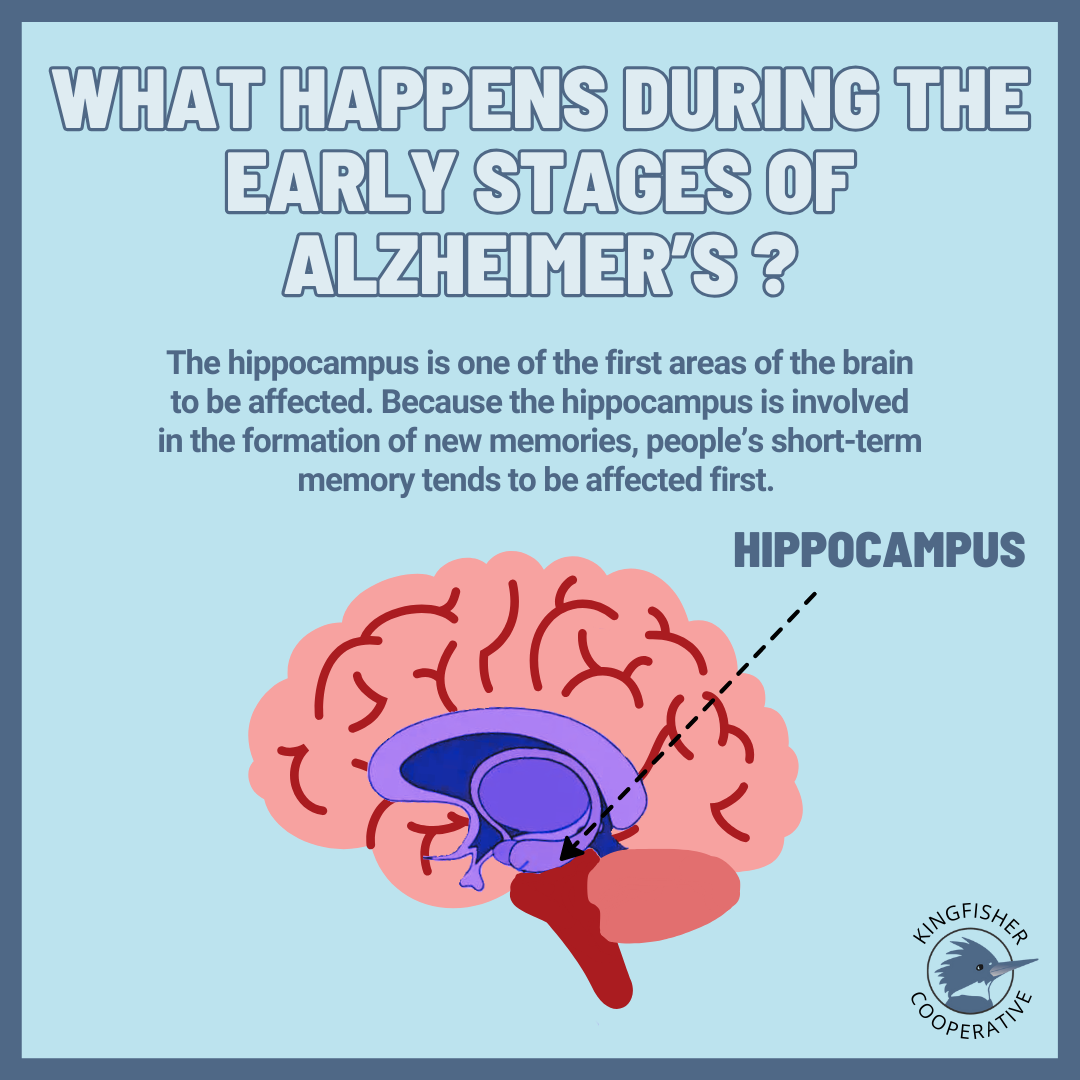
Alzheimer’s disease occurs when amyloid beta protein fragments (called plaques) and tau fibers (called tangles) accumulate in the brain. These plaques and tangles infer with brain cell signals and damage brain cells. This means that healthy brain cells stop working, cannot communicate with other brain cells, and die. These changes in the brain usually begin in areas responsible for memory and, later, spread to affect broader cognitive and behavioral functions as the disease progresses.
The disease primarily affects people over 65, though early-onset Alzheimer’s can occur in younger individuals. While age is the biggest known risk factor, Alzheimer’s is not a normal part of aging, and it’s precise causes are not fully understood. There is currently no cure, but treatments and support services are available to manage symptoms and improve quality of life.
Symptoms
Alzheimer’s typically begins with mild memory problems and difficulties in recalling recent events or conversations. Over time, symptoms worsen to include confusion, impaired reasoning, language problems, disorientation, mood and behavior changes, and ultimately, the inability to perform basic daily tasks independently.
Prevention
Prevention
While there’s no guaranteed way to prevent Alzheimer’s disease, research suggests that certain lifestyle choices can significantly lower the risk of developing it or delay its onset. These include staying physically and mentally active, maintaining a healthy diet, and managing other health conditions.